






























One stock count for store, web and marketplaces.
Retailers selling in store, online and on marketplaces lose margin when each channel keeps its own stock. We connect POS, eCommerce, inventory and finance on Dynamics 365 or Odoo, so each unit is counted once and ships from the best location.
Free, 30 minutes, with a senior consultant. You leave with a recommended first phase or a clear reason to wait.

Where retailers oversell and lose margin.
Split inventory
Each channel tracks its own stock, so one oversells while another holds dead stock.
Slow fulfillment
Orders go to one warehouse by default, even when a nearby store has the unit.
Margin that ignores returns
Promotions, returns and freight aren't netted out, so reported margin drifts from real margin.
Month-end in a workbook
Finance stitches channel exports into a workbook that keeps breaking.
ERP with one stock pool.
Inventory, orders, POS and finance share one platform, and every channel updates the same stock in real time. Orders route to the best location, including ship-from-store. POS and the web store share one item and price master, and returns, promotions and freight net into true margin.
CRM with one profile per shopper.
Segments, loyalty and campaigns use live purchase and service history. Each shopper has one profile across POS, web and service, shared with the ERP, and campaigns trigger from what customers buy.
What every channel gets first
Single stock pool
Every channel reads the same live inventory, so you stop overselling.
Ship-from-store
Each order goes to the location that can ship it at the lowest cost and time.
Endless aisle
Staff can sell stock held anywhere in your network with an accurate count.
True margin by SKU
Promotions, returns and freight net out automatically by SKU and channel.
Modules for retail on each platform
 Microsoft Dynamics 365
Commerce
POS, e-commerce and back office on one item master.
Business Central
Order and stock control for growing retailers.
Customer Service
Returns and cases on one customer record.
Power BI
Sell-through and margin dashboards in Power BI, with one definition per metric across channels.

Sales & POS
Web store and point of sale on one stock pool.
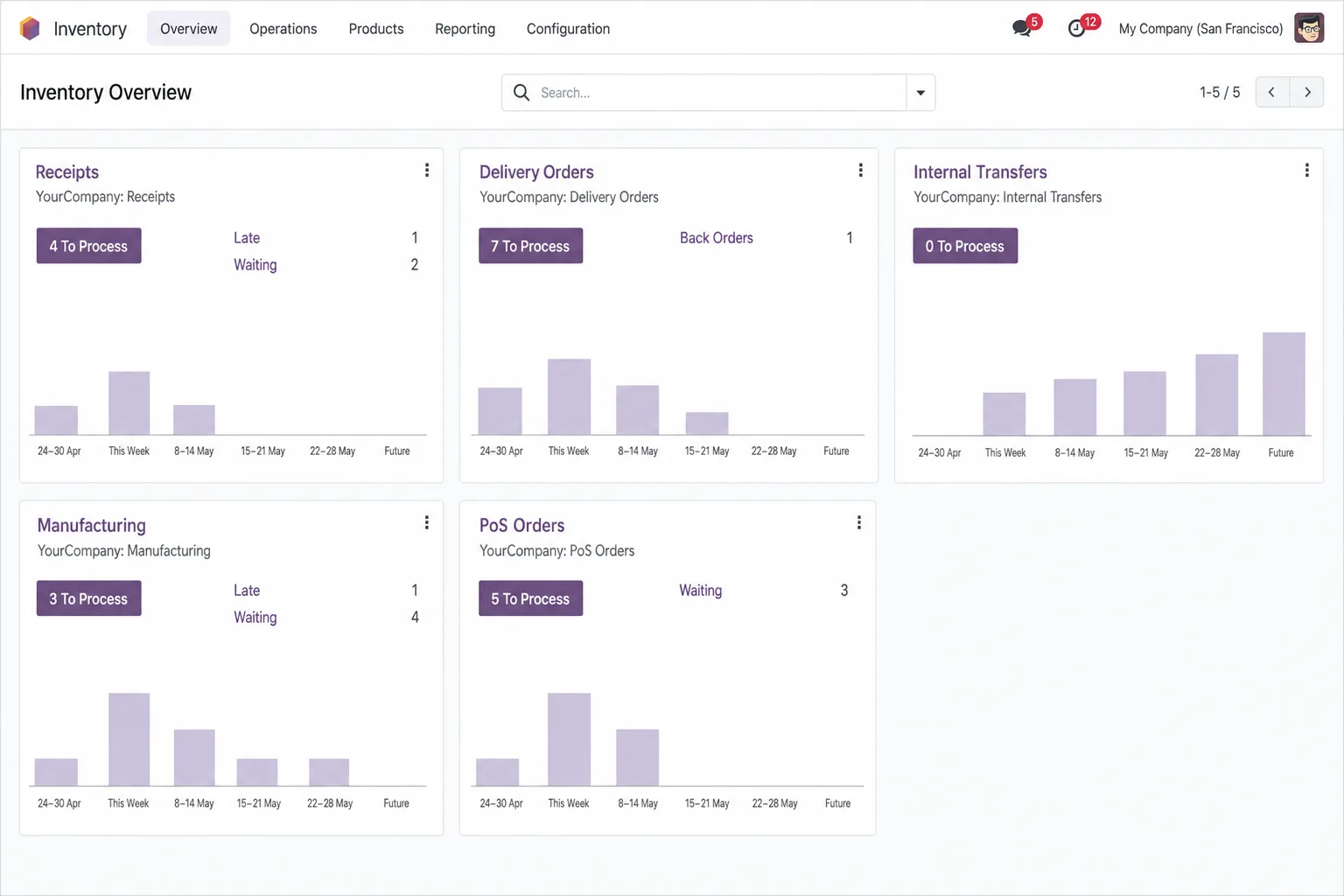
Inventory
Real-time stock across store, web and marketplace.
eCommerce
Storefront on live inventory and pricing.
Marketing
Campaigns and loyalty from purchase data.
From one channel to all of them
A senior consultant traces one unit across your channels in discovery, then plans each cutover around your trading calendar. A retailer's first phase usually runs like this:
- 01
Trace an order across channels
We follow a unit from purchase order to delivery across your channels, then write the process maps and a first-phase scope.
- 02
Design the commerce model
We build the item master, fulfillment rules and customer profile on your real catalog.
- 03
Pilot one channel, then connect the rest
One channel goes live first, and we schedule cutovers outside your peak season.
- 04
Stabilize against live sell-through
Through launch stabilization we tune order routing, margin accuracy and merchandising dashboards.
Questions buyers ask
Can you connect our existing storefront?
Yes. We connect Shopify, Magento, marketplaces and POS through supported connectors and APIs, and your storefront stays where it is.
Will it hold up in peak season?
Yes, if it is tested for it. We load-test the stock pool and order routing for your busiest day, and channels go live before peak season.
How do you handle returns and exchanges?
Returns flow back into inventory and margin automatically, so a web return resold in store needs no manual reconciliation.
How soon can the first channel go live?
After a free discovery call, the written proposal sets the timeline for your first phase.
How is the first phase priced?
Cost depends on channels, stores, users and integrations in scope. Each phase gets a fixed price in the written proposal before it starts, and our ERP implementation cost guide lists typical ranges.